You can see a surprising amount about any competitor for free: their traffic, their technology, their keywords, even their ads. The catch is that no single free tool shows all of it.
This guide ranks the 10 free tools worth your time, with the exact limits of each free tier. Together they cover a full competitor teardown at a cost of zero.
| # | Tool | What you see free | The real limit |
|---|---|---|---|
| 1 | SimilarWeb | Traffic, sources, top countries | 3 months of data, 5 results per report |
| 2 | PoweredBy | Full tech stack + history to 2018 | None: no account, no paywall |
| 3 | Semrush free plan | Competitor keywords and ads | 10 searches per day |
| 4 | Screaming Frog | Crawl any site's structure | 500 URLs per crawl |
| 5 | Ahrefs free tools | Authority, top pages, backlink samples | Small samples per check |
| 6 | Ubersuggest | Domain overview, top pages | 3 reports per day |
| 7 | Wappalyzer | Tech stack while you browse | Extension, one site at a time |
| 8 | Meta Ad Library | Every active Facebook and Instagram ad | No history for inactive ads |
| 9 | Visualping | Alerts when competitor pages change | 150 checks per month |
| 10 | Google Alerts | New mentions of any brand | Depends on Google's crawl |
The five things you can learn about any competitor
Competitor analysis sounds like one job. It is really five separate questions, and each has its own tools.
The 10 tools, ranked
1. SimilarWeb
The fastest answer to "how big are they". SimilarWeb's free tier shows estimated monthly visits, traffic sources, top referring sites and top countries for any reasonably sized website.
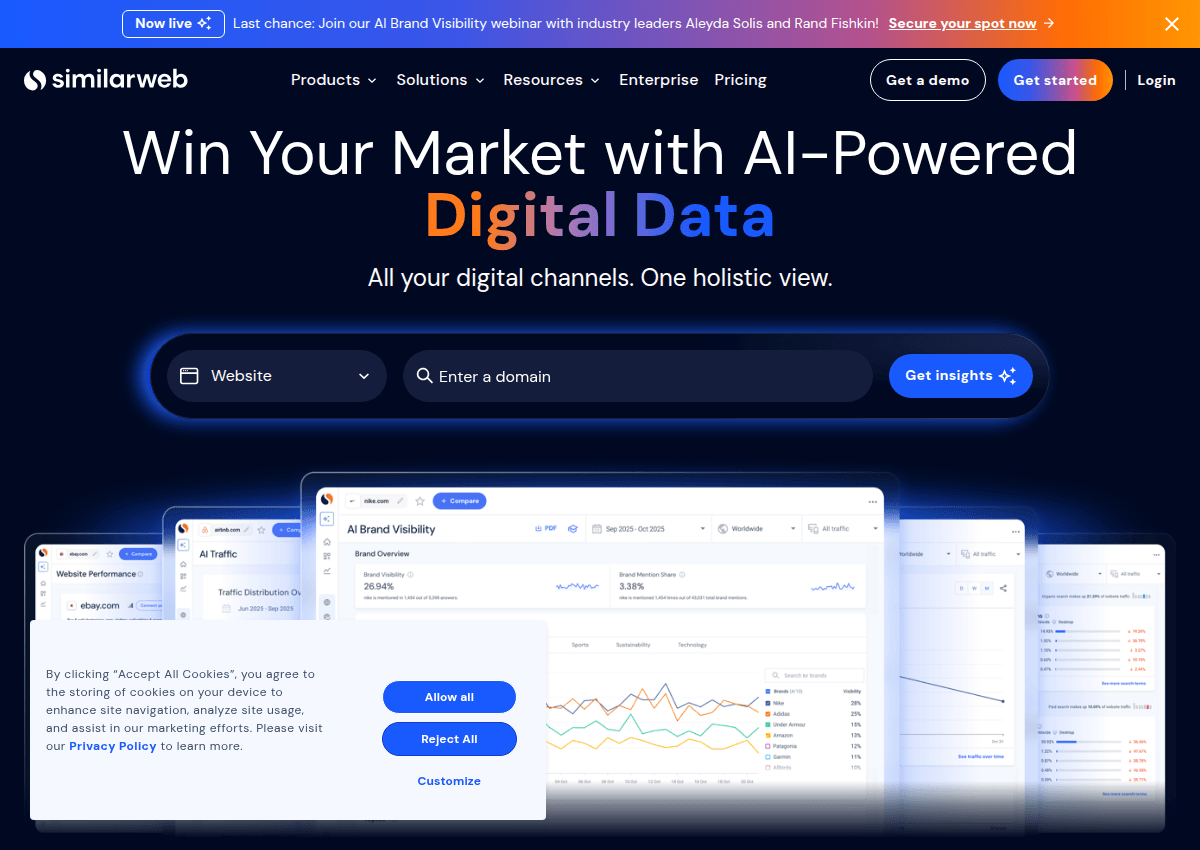
The limits are real: about 3 months of data and 5 results per report. Enough for a snapshot, not for tracking.
One habit that helps: compare rivals against each other rather than reading any single number as truth. The estimates wobble, but the relative sizes are usually right.
2. PoweredBy
PoweredBy answers "what is their website actually built with". Type a domain and it lists the CMS, frameworks, analytics, hosting and more across 54+ technology categories.
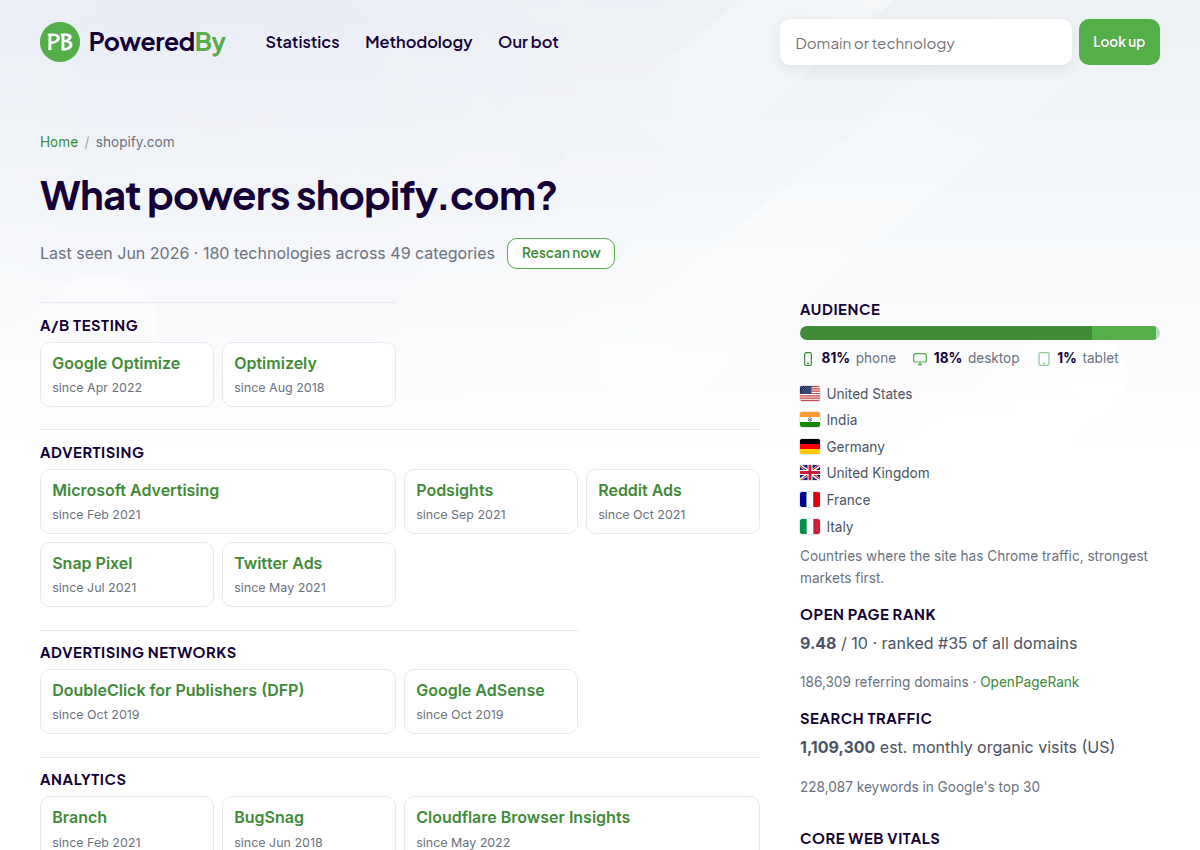
Two things earn it this spot. It is genuinely uncapped, with no account and no paywall, where BuiltWith and Wappalyzer hold their depth behind paid tiers.
And it keeps history back to April 2018, so you can see when a rival switched shopping carts or added an A/B testing tool. Technology changes are strategy changes, announced in code before they are announced anywhere else.
It is built by the Keywords Everywhere team, which we say openly. Judge it by reading a live report or running your own domain first.
3. The Semrush free plan
Semrush's free account allows about 10 searches per day, and that is enough for a focused session. Look up a rival's domain and you see their top organic keywords, their estimated traffic and the ads they run.
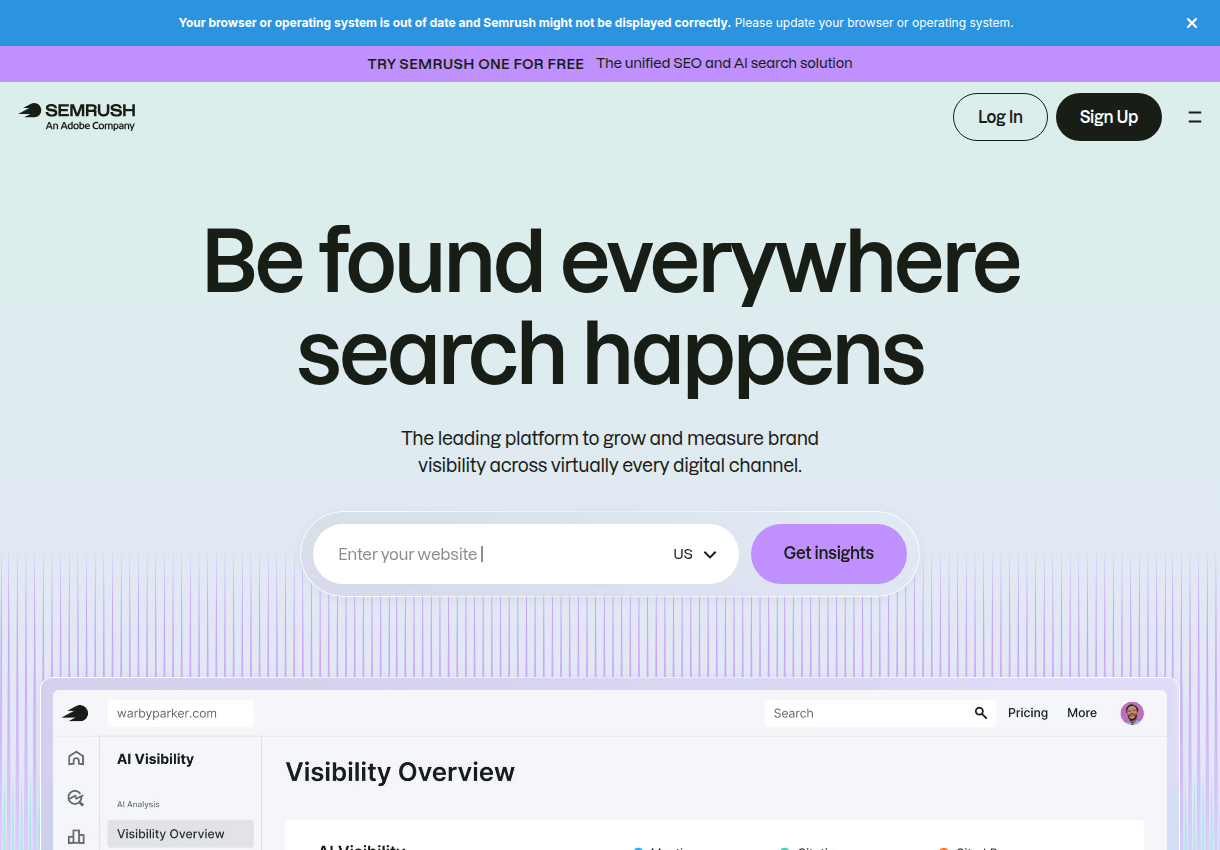
Use the daily searches on your two or three closest competitors. The keyword overlap report tells you exactly where you are losing.
4. Screaming Frog SEO Spider
Screaming Frog crawls a website the way Google does, and the free version handles 500 URLs per crawl. Point it at a competitor and you get their entire structure: every page title, heading, redirect and thin page.
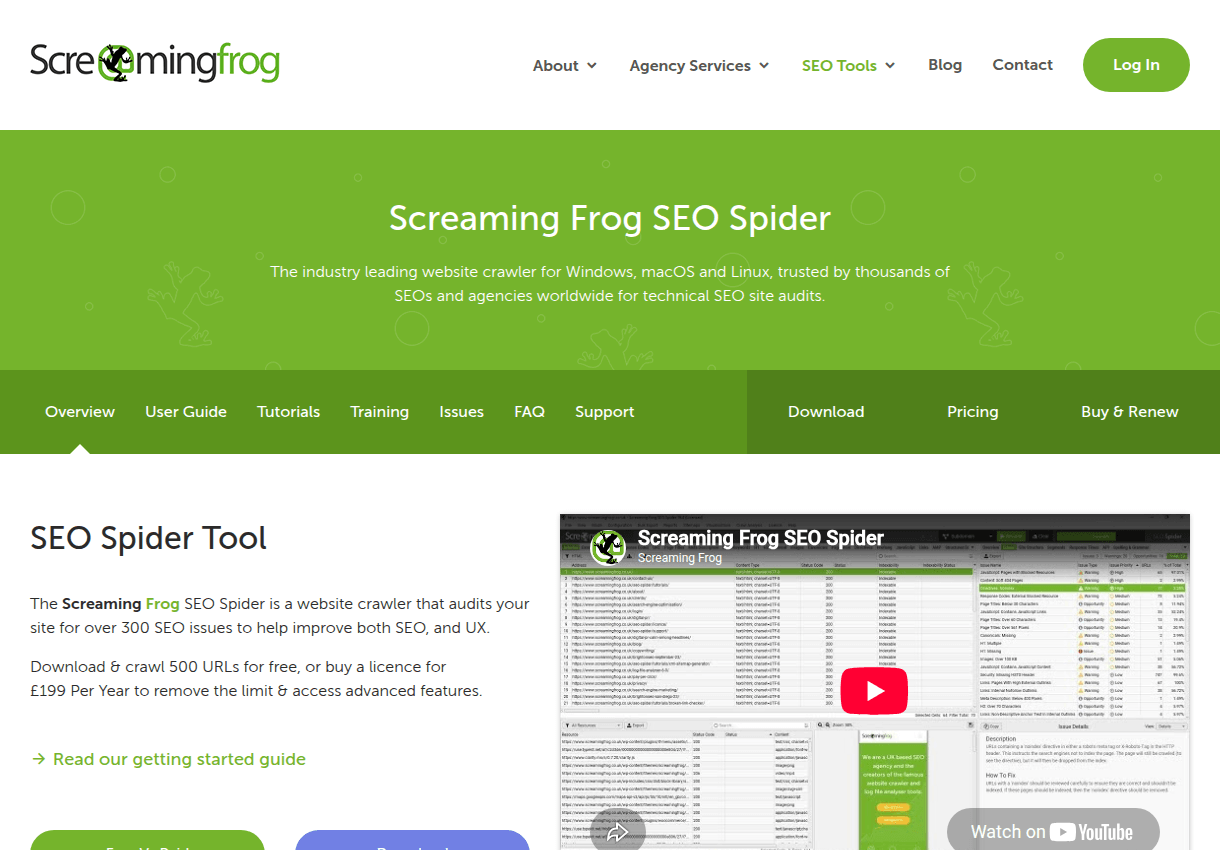
Reading a rival's page titles in one spreadsheet is the fastest way to understand their content strategy. For most small-business sites, 500 URLs covers everything.
5. The Ahrefs free tools
Ahrefs publishes free versions of its core checks: website authority, a sample of a domain's backlinks and its top pages. The samples are small, but the authority score alone answers "can I realistically outrank this site".
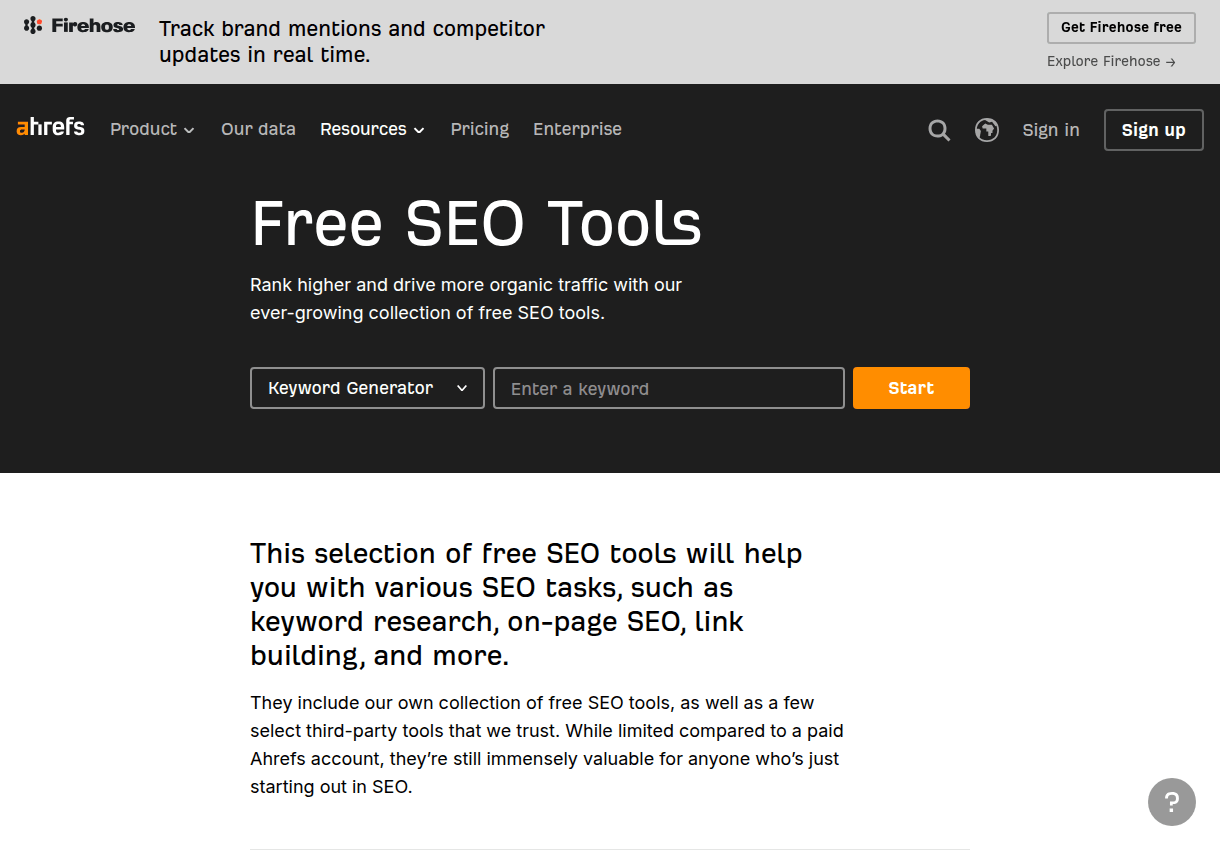
Pair it with a difficulty check on your target keywords and you know which fights to pick.
6. Ubersuggest
Ubersuggest's free plan allows 3 reports per day with a domain overview, top pages and basic keyword gap data. The daily cap is tight, but the reports are beginner-friendly and readable at a glance.
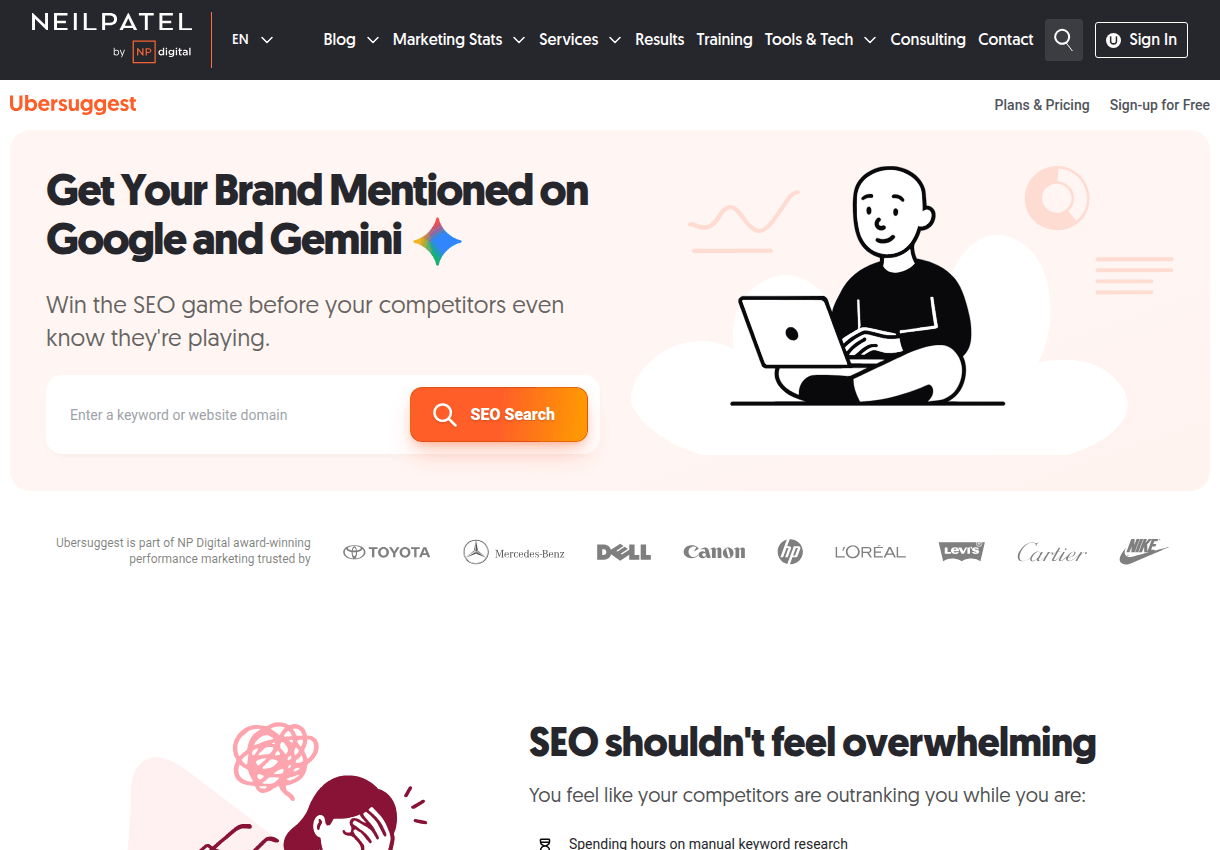
Good as a second opinion when SimilarWeb and Semrush disagree.
7. Wappalyzer
Wappalyzer is a free browser extension that shows the technology stack of whatever site you are on. It answers the same question as PoweredBy, one site at a time, while you browse.
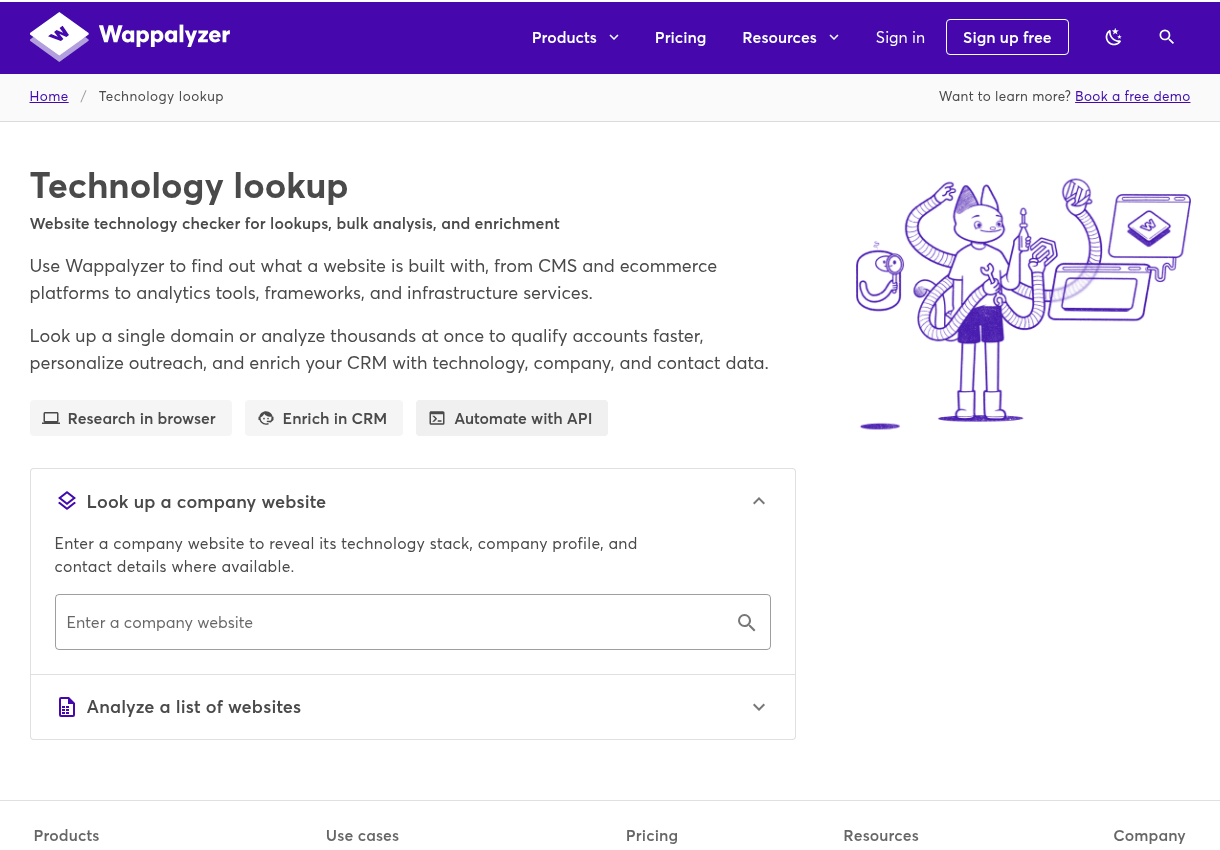
Use the extension for quick curiosity checks. Use a profiler when you want history or want to browse every site using a specific technology.
8. Meta Ad Library
Every active ad on Facebook and Instagram is public in the Meta Ad Library, searchable by advertiser name, for free. It is the closest thing to reading a competitor's marketing budget.
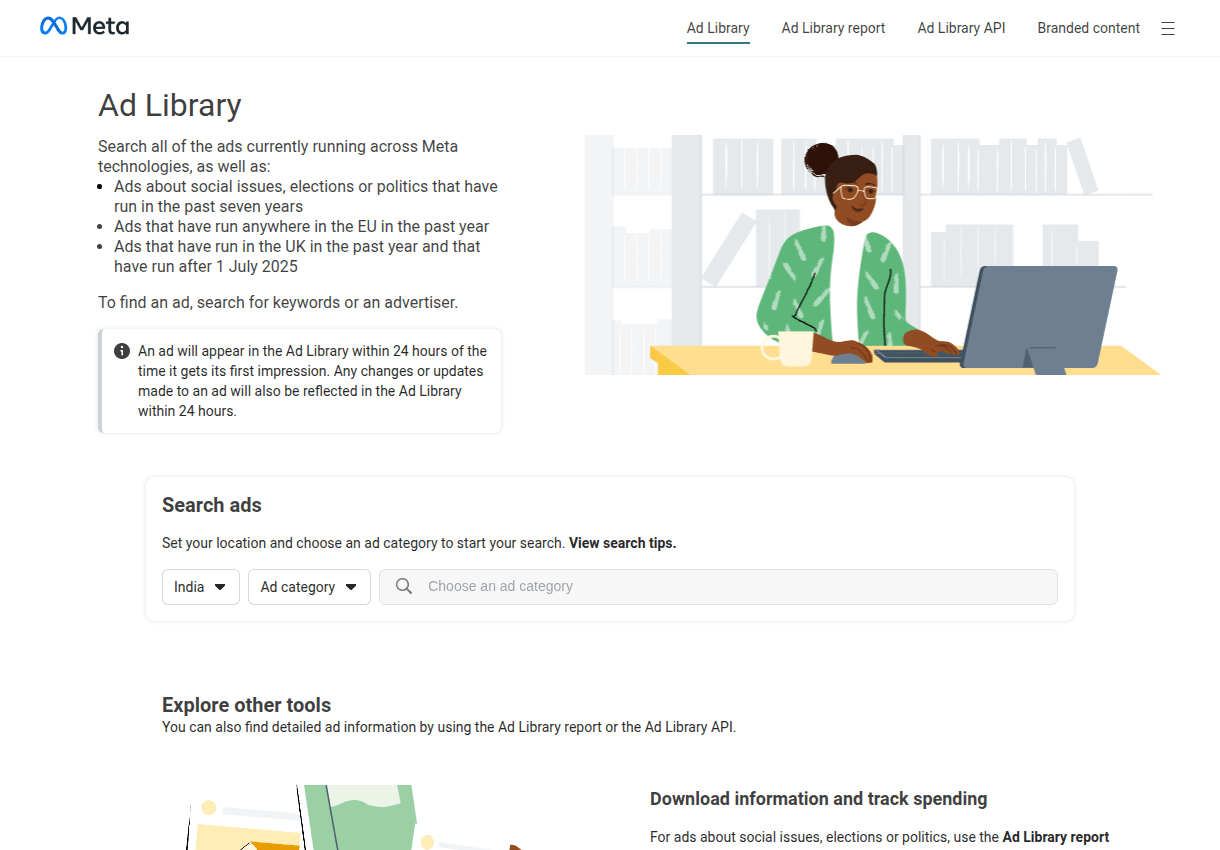
Look at which ads have run the longest. Ads that keep running are ads that keep working.
9. Visualping
Watching competitor pages by hand does not scale, so let a monitor do it. Visualping's free plan checks pages about 150 times per month and emails you when something changes.
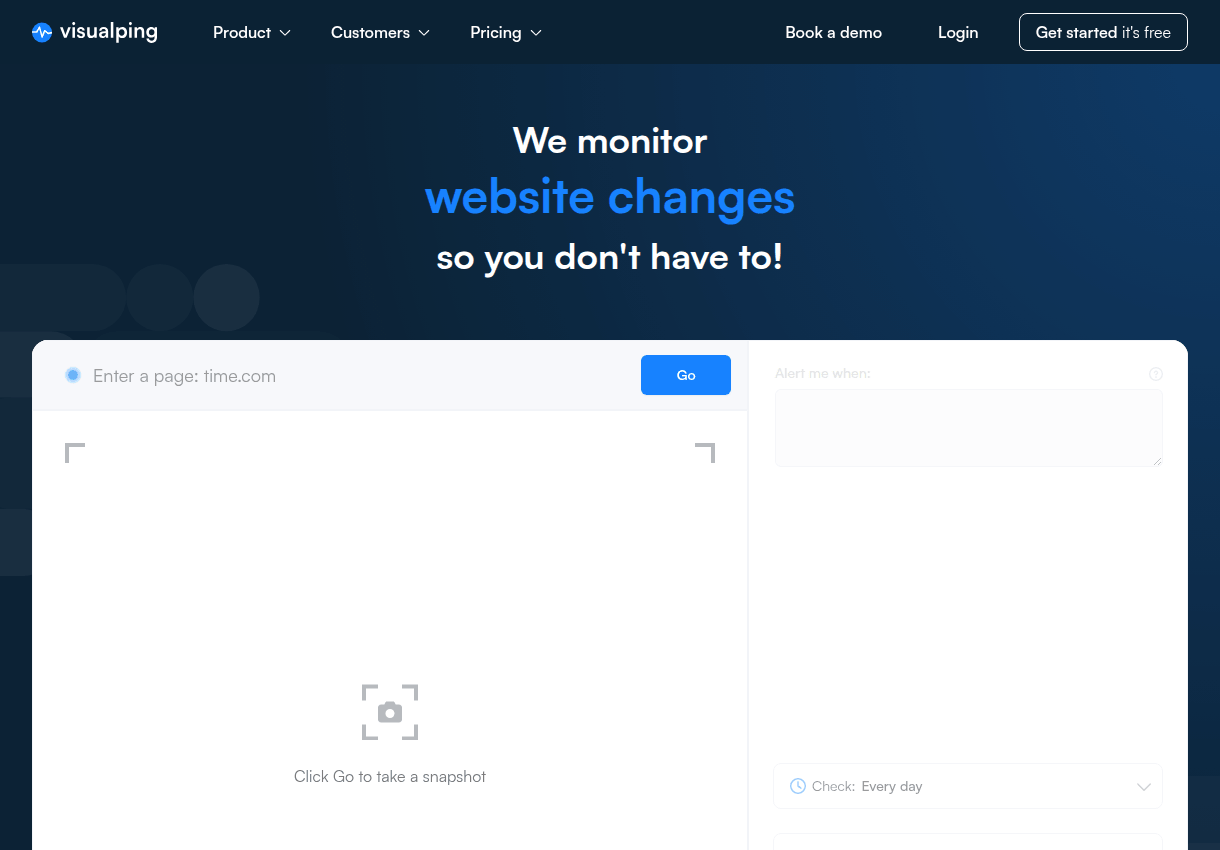
Point it at a rival's pricing page and their homepage. Price changes and repositioning show up there first.
10. Google Alerts
The oldest tool on this list still earns its place. An alert on each competitor's brand name at google.com/alerts surfaces their press, reviews and mentions as Google finds them.
It costs nothing and takes one minute to set up. The gaps in coverage are real, but so is the price.
A 30-minute competitor teardown, step by step
Here is how the tools combine when you actually sit down to do it.
Do this for your three closest rivals and write down every gap you find. Keywords they rank for that you do not, tools they run that you lack, pages they update that you have ignored.
That gap list is your next quarter's roadmap. It came from public data and cost nothing.
How we picked these
Every tool here was tested against the same three competitor domains in July 2026. The free-tier limits listed are what we actually hit, not what the pricing pages imply.
One entry, PoweredBy at number 2, comes from the Keywords Everywhere team, and we say so plainly rather than hiding it. It is on the list for the same reason as everything else: the free tier does a real job without asking for a card.
The one-line takeaway: SimilarWeb tells you how big a rival is, PoweredBy tells you what they are built with, and the Semrush free plan tells you where their traffic comes from. Run all three and you know more than most of their employees.