You can look up any website's estimated traffic in about ten seconds, free. The real skill is the second half of this article: knowing how those numbers are made, and when not to believe them.
Here is the fast method, the cross-check, and an honest guide to reading traffic estimates without fooling yourself.
Step 1: run the domain through a free traffic checker
The Website Traffic Checker from the Keywords Everywhere team is the quickest first look: type a domain and you get estimated monthly visits and the traffic picture, no account required.
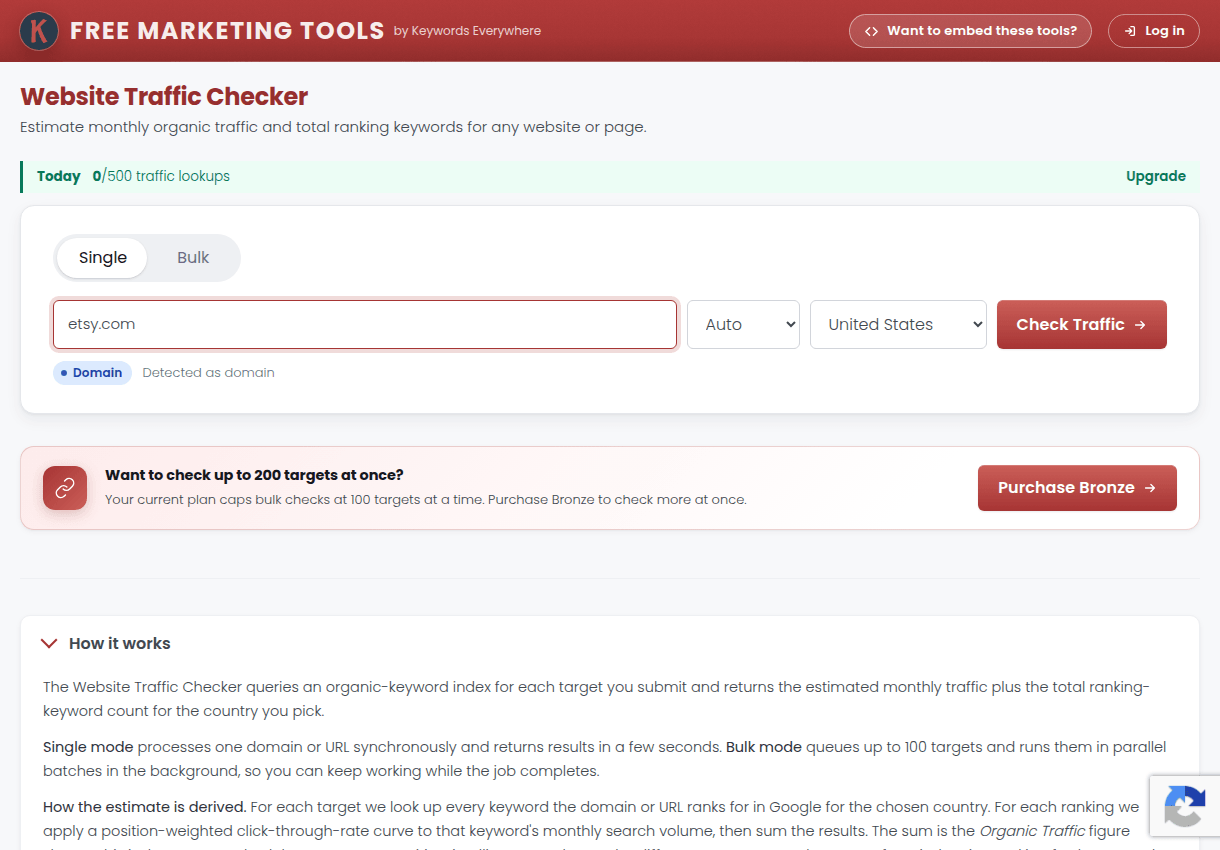
Write the number down, but do not stop here. One estimate is an anecdote.
Step 2: cross-check with SimilarWeb
SimilarWeb runs the best-known traffic panel on the web. Its free lookup adds the parts a single number misses: traffic sources, top countries and trend direction over the last 3 months.

Now you have two independent estimates. If they roughly agree, you have a working number. If they disagree wildly, that gap is itself information: the site's audience is probably niche, mobile-heavy or B2B.
Step 3: know how the sausage is made
No tool counts a site's real visits. Only the owner's analytics does that. Everything else is modeled.
This is why the numbers disagree between tools, and why both can differ from the owner's analytics by 2x in either direction.
Step 4: apply the trust rules
Estimates are not equally wrong everywhere. The error follows patterns you can plan around.
| Situation | Trust level | Why |
|---|---|---|
| Big consumer site (1M+ visits) | High | Panels see plenty of its visitors |
| Ranking one site against another | High | Model errors mostly cancel out |
| Trend direction over months | High | Bias stays constant, movement is real |
| Mid-size site (50k-500k visits) | Medium | Thinner panel coverage, wider error |
| Small or B2B site | Low | Too few panel users ever visit it |
| Absolute visit counts | Low | 2x error in either direction is normal |
The practical translation: use estimates to rank competitors and spot trends, never to quote absolute numbers in a business plan.
Step 5: for small sites, switch signals
Below roughly 30,000 to 50,000 monthly visits, traffic panels go mostly blind. Many tools will show nothing, or a number invented from very little.
For small competitors, rank them by footprint instead: how many keywords they rank for, how fast their backlinks grow, and how often they publish. Their technology stack tells you how seriously they are investing before traffic ever shows it.
The five-minute routine
Run the domain through the Website Traffic Checker, then through SimilarWeb. Note both numbers and the sources breakdown.
If the two agree within about 50 percent, average them and move on. If they disagree badly, treat the site as panel-blind and rank it by keywords and links instead.
Repeat monthly for your main rivals and chart the direction. The trend line is the most trustworthy thing any of these tools produce.
The one-line takeaway: two free lookups get you any site's traffic estimate in a minute; trust it for comparing rivals and spotting trends, and never for exact counts, small sites or business plans.