The short verdict: Semrush sees a competitor's search life better, every keyword, position and ad, while SimilarWeb sees their whole traffic life better, every source, country and engagement signal. "Which is better" depends on which half you are asking about.
They overlap just enough to get compared and differ enough that many teams run both. Here is the honest split, with pricing checked this July.
| Semrush | SimilarWeb | |
|---|---|---|
| Core lens | Search: keywords, positions, ads | Traffic: visits, sources, engagement |
| Sees organic keywords | Yes, its home turf | Top-level only |
| Sees traffic sources | Search-centric view | Yes: direct, social, email, referral, ads |
| Sees engagement (time, bounce) | Limited | Yes, a signature strength |
| Free tier | ~10 reports/day, 1 project | Sample lookups, ~3 months, 5 results |
| Published pricing | SEO plan $139/mo ($117.33 annual) | Not published: quote-based tiers |
| Data window (paid) | Years of keyword history | Up to 37 months of traffic history |
Two different answers to "how big are they"
Semrush reconstructs a site from search outward: it knows the keywords, so it infers the traffic. SimilarWeb reconstructs from traffic inward: it models the visits, then splits them by source.
That is why they disagree on the same site, and why the disagreement is usually informative rather than broken. We covered how to read traffic estimates honestly earlier in this series.
What Semrush shows you about a rival
Type a competitor's domain into Semrush and the organic research report lists their ranking keywords with positions, volumes and the pages that earn them. It is the raw material of a keyword gap analysis.
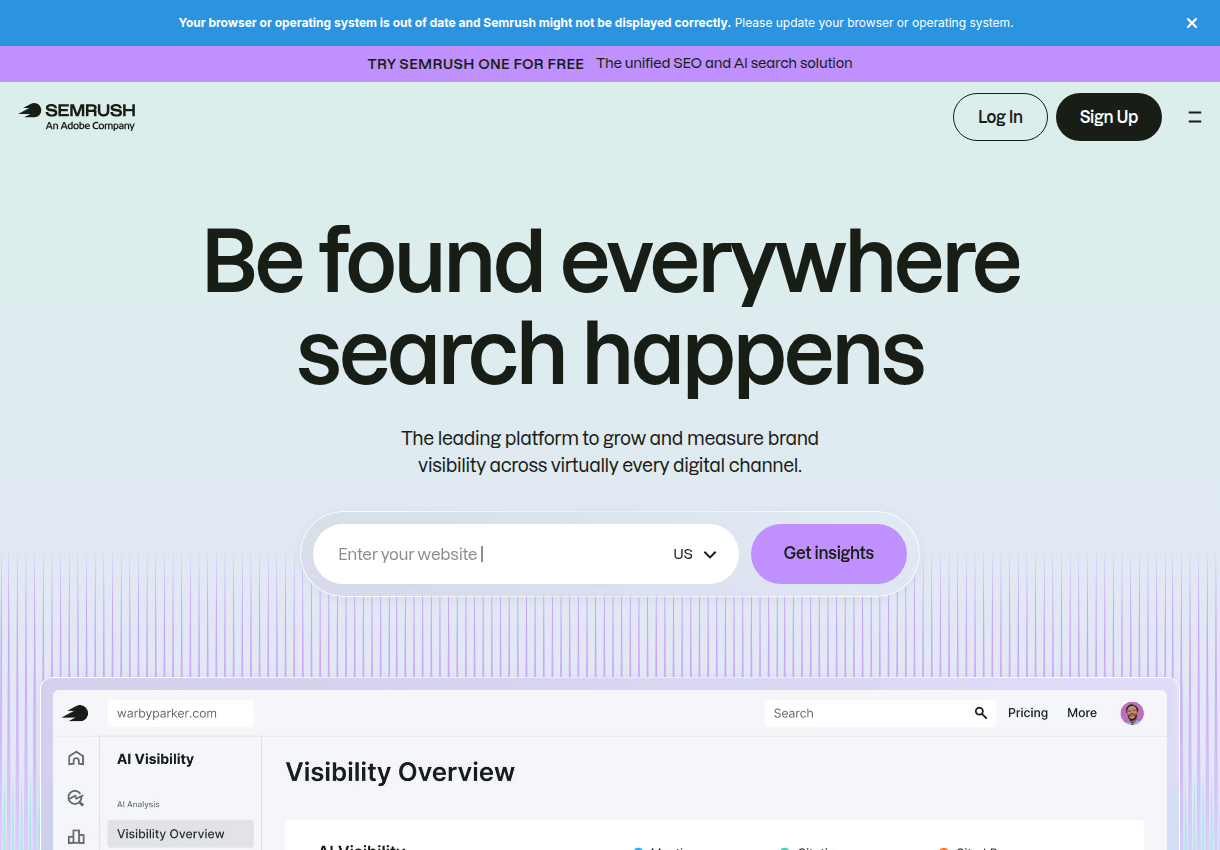
The ads side is equally revealing: their paid keywords and ad copy history. Free accounts get about 10 domain lookups a day, enough for focused sessions on your two or three closest rivals.
The 2026 pricing: the SEO plan at $139 a month, or $117.33 on annual billing, then Starter at $199, Pro+ at $299 and Advanced at $549, with annual billing about 17 percent less.
What SimilarWeb shows you about a rival
SimilarWeb answers the questions search tools cannot: how big is the site overall, where do visitors come from, and do they stick around.
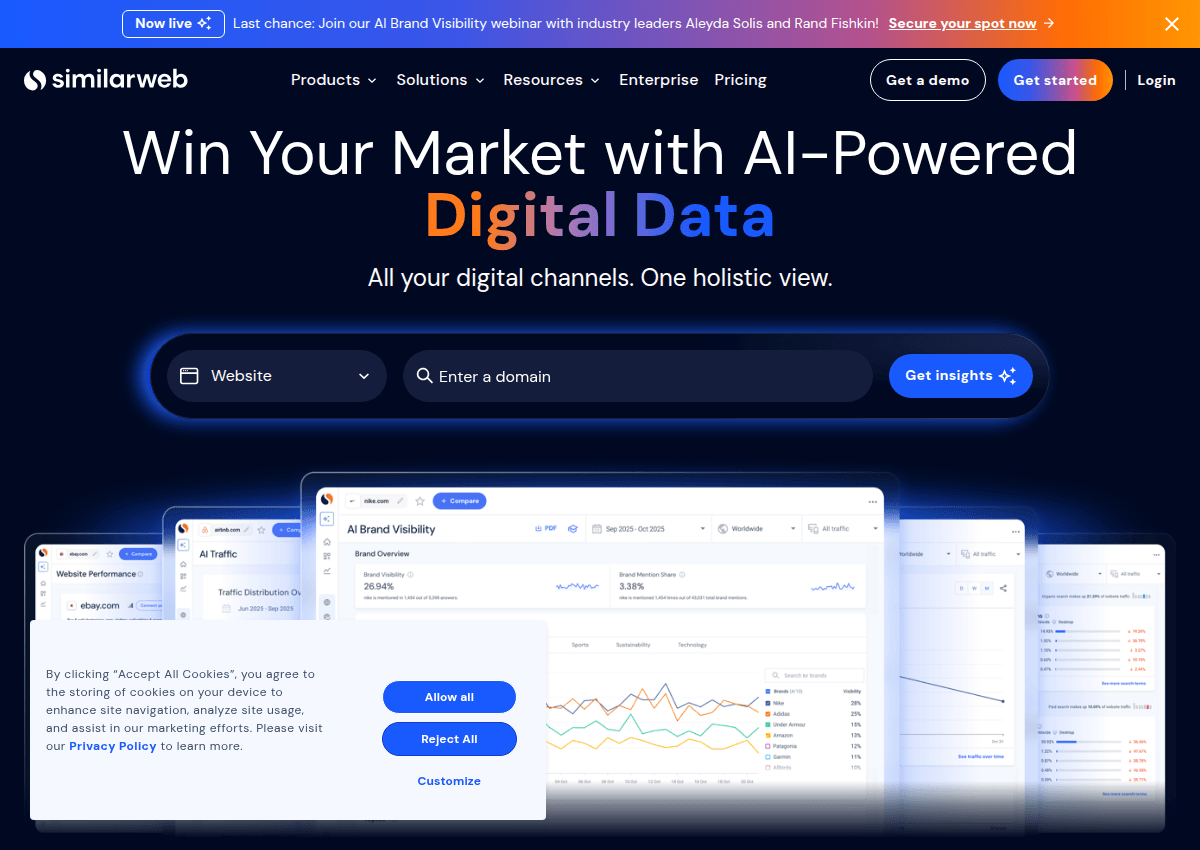
The source split is the strategic gold. A rival getting 40 percent of visits from email has a machine you cannot see in any SEO tool, and engagement metrics show whose traffic actually converts attention into time.
Pricing is the catch: SimilarWeb does not publish a price list. There are self-service packages for individuals and quote-based business tiers, with the deep data, up to 37 months of history, in the paid product.
Choose Semrush if...
- Search is your battlefield: you need their keywords, positions and ads, not just their size.
- You want published pricing and a usable free tier for daily spot checks.
- You will act on the data with content and campaigns, which is what its workflow tools exist for.
Choose SimilarWeb if...
- You need the full traffic picture: sources, countries, engagement, trend.
- You compare markets or niches, where audience size and behavior decide entry.
- Non-search channels, social, email, referrals, are where your rivals actually live.
The free-stack alternative
For most small teams, the free tiers of both, combined, answer the weekly questions: SimilarWeb's lookup for size and sources, Semrush's 10 daily reports for keywords and ads.
Our free competitor analysis stack builds that workflow end to end, and it costs nothing until your questions genuinely outgrow it.
How we compared them
Semrush pricing was verified from its public pricing page in July 2026. SimilarWeb's pricing structure was checked the same day and remains unpublished, which is itself a data point. Neither company sponsors this site.
The one-line takeaway: Semrush reads a rival's search strategy, SimilarWeb reads their audience. Ask "what do they rank for" in Semrush, ask "how big are they and where do people come from" in SimilarWeb, and treat both as estimates.