Entering a niche is a bet that takes months to pay out, and most losing bets were visible in advance. An afternoon of free research answers the four questions that matter: how big, who wins, how hard, and where is the money.
Here is that afternoon, step by step.
Question 1: how big is the demand?
Niche size is not one keyword's volume. It is the depth of the whole question pool, so start by generating it.
Run a seed term through our keyword tool and read what comes back: hundreds or thousands of real queries people type around the topic.
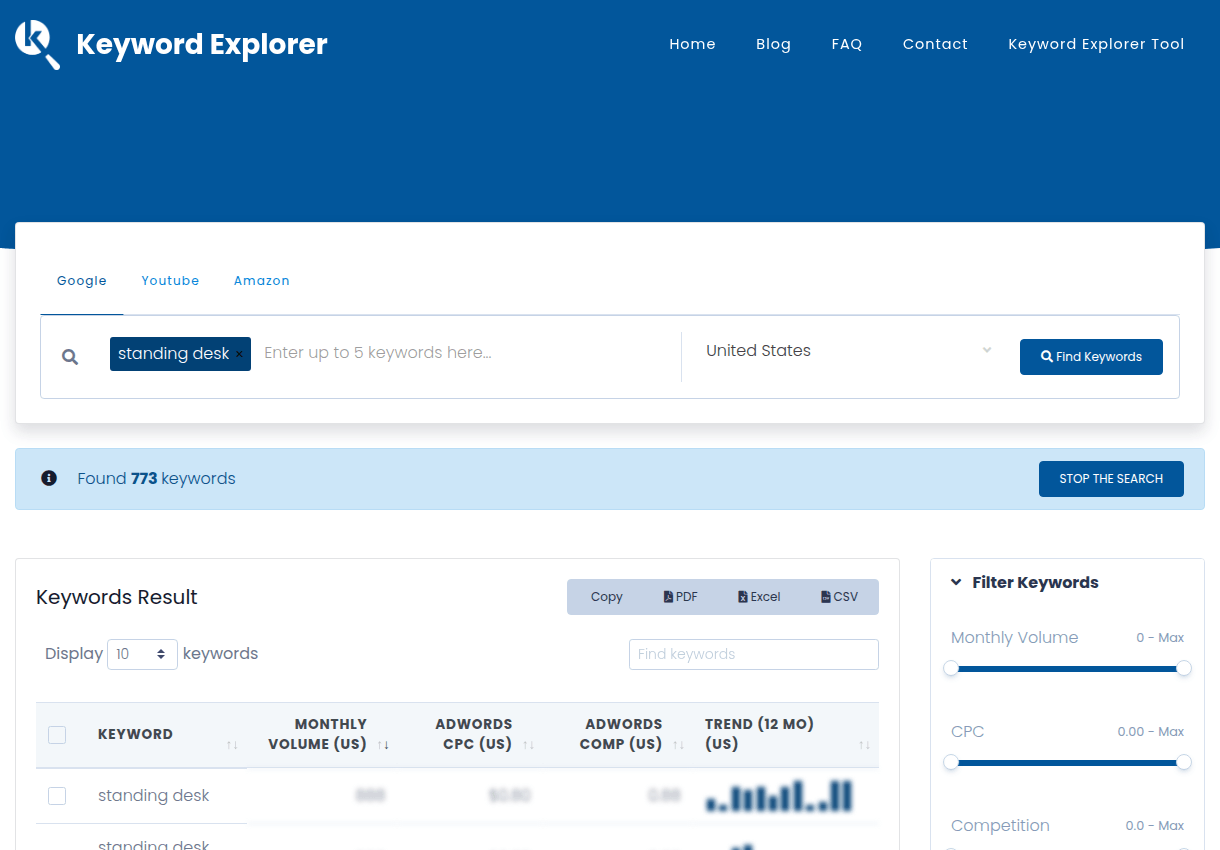
Read the shape, not just the count. Lots of specific, problem-flavored queries ("standing desk wobble fix") signal an engaged audience; a shallow list of generic terms signals thin demand.
Check the trajectory too: Google Trends shows whether interest is growing, seasonal or fading. Entering a declining niche is buying a leaking boat.
Question 2: who currently wins?
Search ten of the niche's commercial keywords and inventory page one. You are profiling your future opponents.
| If page one is mostly | It means | Your odds |
|---|---|---|
| National brands and big publishers | Authority niche, expensive to crack | Long game only |
| Focused niche sites like your plan | Proven model, real competition | Good with better execution |
| Forums, Reddit and thin content | Demand exists, supply is weak | Excellent |
| Marketplaces and product grids | Google reads the intent as pure buying | Content plays poorly here |
The forum-heavy pattern is the classic green light: people are asking in volume and nobody serious is answering.
Question 3: how hard is entry?
Take the three focused sites that keep appearing and tear them down with the tools from earlier in this series.
The playbooks for each check: authority scores, the 30-minute content teardown and the traffic trend read.
A niche whose winners are coasting, old content, flat traffic, no new pages, is beatable regardless of their authority head start.
Question 4: where is the money?
Demand without money makes a hobby. Two free signals separate wallets from curiosity.
First, CPCs: keywords with real cost-per-click have advertisers, and advertisers do math. Consistent CPCs above roughly a dollar across the niche's commercial terms mean transactions happen.
Second, the ad libraries: search the niche's brands and see who advertises and how long their ads have run. Long-running ads are profitable ads, and profitable ads mean a business model works.
The verdict: four quadrants
The "niche down" quadrant deserves a note: most crowded niches hide open corners. "Standing desks" is owned; "standing desks for small home offices" might not be, and the keyword pool from question 1 shows you those corners explicitly.
The one-line takeaway: measure the keyword pool, profile page one, tear down the incumbents, follow the ad money. Four questions, one afternoon, and you enter niches on evidence instead of vibes.