A competitor's content strategy is not a secret. Their best pages, their formats, their publishing pace: all of it is readable from public data in half an hour.
Here is the timed version of the teardown we run ourselves, with free tools at every step.
Minutes 0-10: find what actually earns their traffic
Start with the Top Pages Finder from the Keywords Everywhere team: enter the rival's domain and it ranks their pages by estimated search traffic, free.
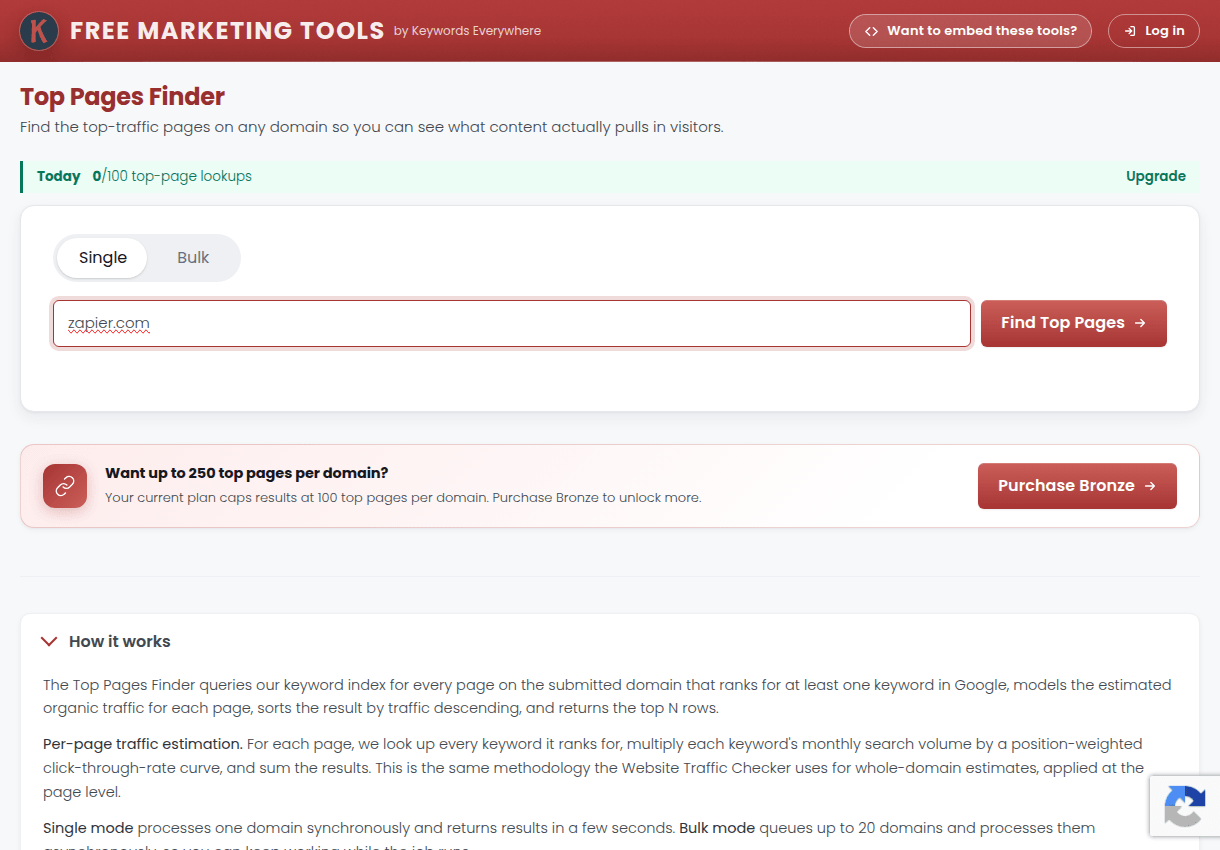
Read the top 20 like a portfolio. On most sites they carry the majority of organic traffic, and the pattern in them is the strategy.
| If the top pages are mostly | Their strategy is |
|---|---|
| Free tools and calculators | Product-led: tools earn links and rankings |
| Beginner guides and glossaries | Top-funnel SEO at volume |
| Comparisons and "best X" lists | Bottom-funnel: harvesting buyers near decision |
| Templates and downloads | Lead capture: content as email bait |
| Product and category pages | Brand strength doing the work, not content |
Minutes 10-18: crawl the structure
Point Screaming Frog's free tier at their site: 500 URLs is enough for most blogs. Export the internal pages and you are reading their content operation in one spreadsheet.
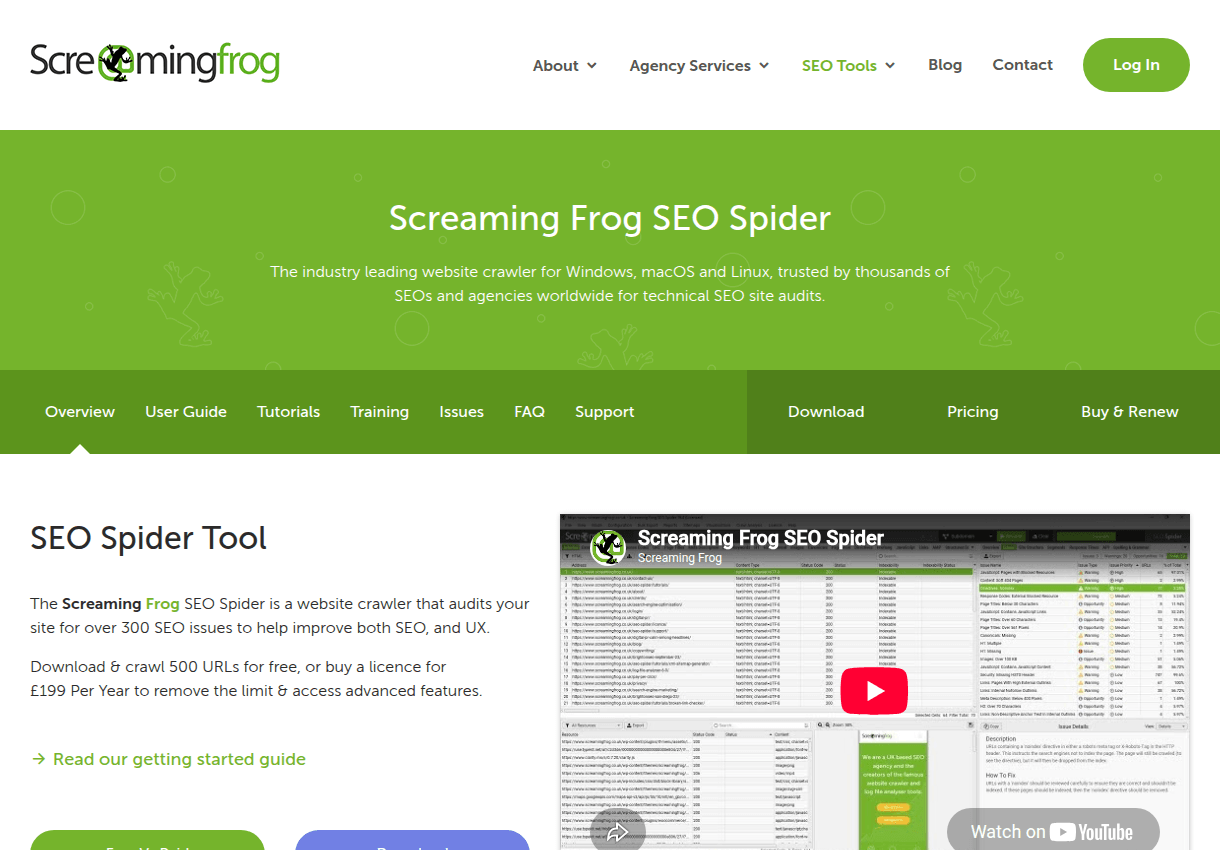
Three columns tell the story. URL patterns show their hubs and clusters. Title tags show their keyword targeting, readable in one scroll. Dates in URLs or lastmod fields show cadence.
Count posts per month over the last year. Two a month is a side project, ten a month is a funded operation, and a sudden jump means new budget arrived.
Minutes 18-25: read the formats
Open their five biggest pages and note the shape of each: listicle, comparison table, calculator, long-form guide, video-led post.
Formats repeat because they work. If comparisons dominate their winners, the niche rewards comparisons, and that lesson transfers to you free of charge.
Note the depth too: word count, original data, screenshots, custom graphics. That is the production bar you have to clear to compete, and their most-linked pages show which formats earn links on top of rankings.
Minutes 25-30: write the three lists
Close the tabs and write down, from memory, the three lists that survive contact with Monday.
Cross-check list one against a keyword gap analysis and you have a content calendar backed by two independent signals.
Then put their sitemap under change monitoring so every future move reports itself. The teardown becomes a living feed instead of an annual chore.
The one-line takeaway: top pages show what works, the crawl shows how they operate, the formats show what the niche rewards. Thirty minutes per rival, free tools only, three lists you will actually use.